







| Re: A plea for joined up, commonly understood, transport information and tickets Posted by Noggin at 12:54, 8th February 2026 |     |
From Rail Business Daily
Detailed plans have been published for ‘Mini Switzerland’, a national transport demonstrator soon to be launched in the Hope Valley.
The new report sets out a fully worked-up blueprint for creating a Swiss-style integrated public transport network in the Peak District, where hourly buses and trains are carefully timed to connect, tickets work across all modes, and the whole system operates as one joined-up network.
The project represents an opportunity for the East Midlands to demonstrate national leadership in rural mobility, by hosting the UK’s first real-world demonstrator of fully integrated bus and rail services outside of a major city.
The new report sets out a fully worked-up blueprint for creating a Swiss-style integrated public transport network in the Peak District, where hourly buses and trains are carefully timed to connect, tickets work across all modes, and the whole system operates as one joined-up network.
The project represents an opportunity for the East Midlands to demonstrate national leadership in rural mobility, by hosting the UK’s first real-world demonstrator of fully integrated bus and rail services outside of a major city.
I don't think that anyone can credibly claim to be emulating Switzerland without biting the bullet and re-instating (and electrifying) the mere 20 miles of railway which would take a significant chunk of traffic (including freight) off the roads of the Peak District.
In fact, if the Government is serious about backing UK tourism, perhaps GBR should commission Stadler to produce a UK-spec panoramic unit with proper catering? I'd imagine that could be very profitable and done well, would be a big tourist draw in places like the Peak District, West Country, Scottish & Welsh Highlands?
| Re: A plea for joined up, commonly understood, transport information and tickets Posted by bobm at 10:39, 8th February 2026 | |
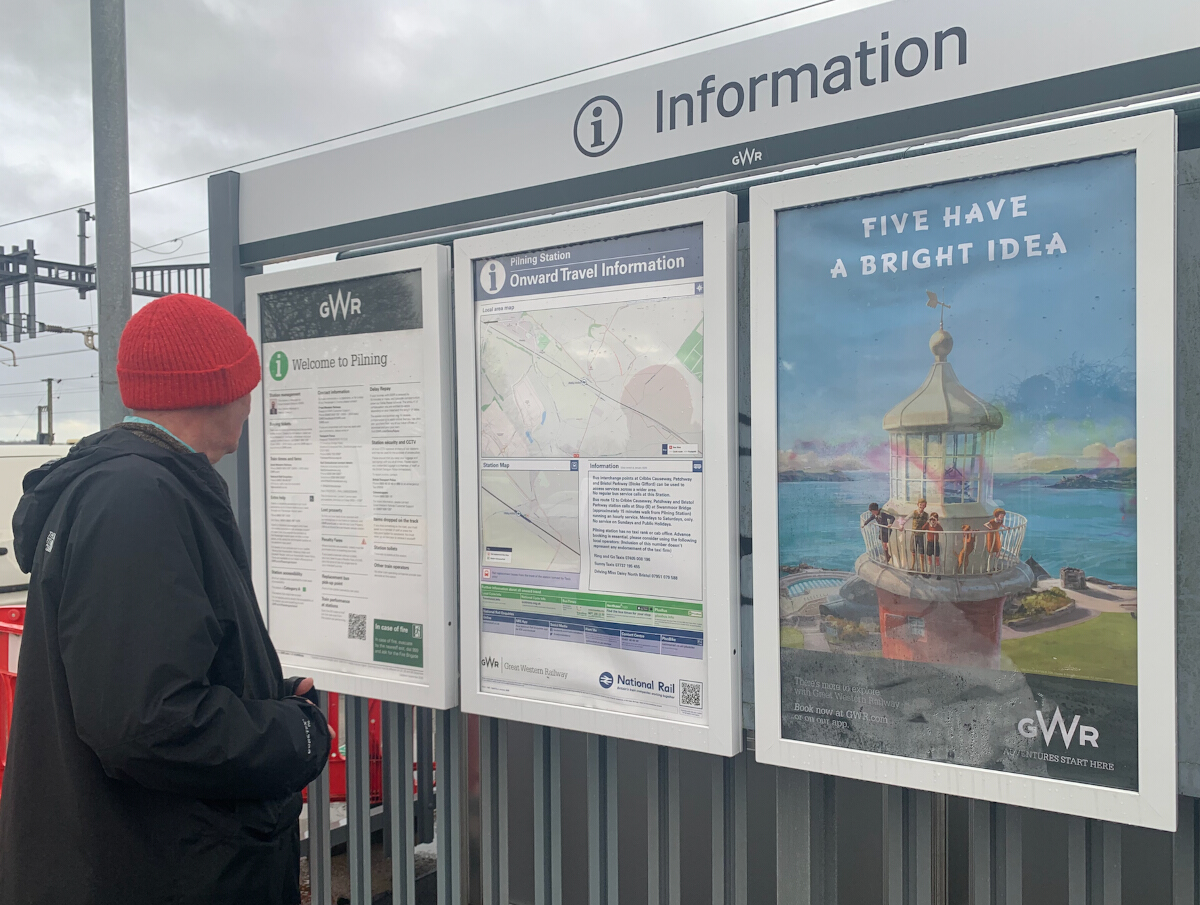
Just looking at that Famous Five poster, it seems apposite given your trip to Severn Beach yesterday.
| A plea for joined up, commonly understood, transport information and tickets Posted by grahame at 10:20, 8th February 2026 | |
I left home at 08:40 yesterday morning, and reached Bristol Temple Meads where I was meeting friends at 09:53. I had pre-booked my rail tickets for the day, but wasn't able to collect them. I had elected to do at the station because of a machine fault there, and had to explain my way past the train manager into letting me make a technically against-the-rules journey because I had no ticket. Prior knoweldge let me correct the situation - and do so quicker that the TM's advice too.
I caught the 15:32 train from Pilning yesterday afternoon, and was home at about 17:10. I was only able to do that, with correct tickets to do it, because of research ahead, a pre-booked ticket for the first leg, and information including geography already know.
Had I followed "official advice" and online suggestions, it would have been 08:40 from home to 10:27 in Bristol (107 minutes v the 73 minutes taken), and 15:32 from Pilning to 18:25 home (173 minutes v the 98 minutes taken). No changes to the services needed - just integrated information and ticketing accessible to the customer.
A presence of a person with some knowledge at the starting stations would work wonders. At Pilning, with just 294 journeys per annum, this is impractical on current passenger levels. At Melksham, with 60,930 journeys - that's over 200 journeys for every one made from Pilning - it does make sense.
From Rail Business Daily
Detailed plans have been published for ‘Mini Switzerland’, a national transport demonstrator soon to be launched in the Hope Valley.
The new report sets out a fully worked-up blueprint for creating a Swiss-style integrated public transport network in the Peak District, where hourly buses and trains are carefully timed to connect, tickets work across all modes, and the whole system operates as one joined-up network.
The project represents an opportunity for the East Midlands to demonstrate national leadership in rural mobility, by hosting the UK’s first real-world demonstrator of fully integrated bus and rail services outside of a major city.
The new report sets out a fully worked-up blueprint for creating a Swiss-style integrated public transport network in the Peak District, where hourly buses and trains are carefully timed to connect, tickets work across all modes, and the whole system operates as one joined-up network.
The project represents an opportunity for the East Midlands to demonstrate national leadership in rural mobility, by hosting the UK’s first real-world demonstrator of fully integrated bus and rail services outside of a major city.
