






Recent Public Posts - [guest]
| Re: Difficulty of booking international rail tickets In "Fare's Fair" [375086/31906/4] Posted by Trowres at 17:09, 13th May 2026 |      |
The European Commission has proposed that before the end of the decade passengers should be able to buy one ticket for one journey and be better protected when trains are late or cancelled.
https://www.theguardian.com/politics/2026/may/13/eu-proposal-cross-border-europe-train-bookings
“Europeans will be able with the click of a button to plan, compare and purchase multimodal journeys across borders while benefiting from stronger rail passenger rights, greater transparency and better protection every step of the way,” the EU transport commissioner Apostolos Tzitzikostas, told reporters on Wednesday
How:
Under the plans, major railway companies, such as Deutsche Bahn, SNCF and Trenitalia, would be forced to sell competitors’ tickets on their website, and share data with booking platforms enabling an offer of single tickets for long cross-border journeys.
But:
[The plans] already face stiff opposition from train operators. The Community of European Railway and Infrastructure Companies (CER) said: “Underneath the surface of this rosy vision, lies unprecedented and unjustified regulatory interventionism.”
It said the rail tickets market “largely meets” customer expectations...
It said the rail tickets market “largely meets” customer expectations...
| Re: Reopening former rail line between Hythe and Totton - ongoing discussion, merged topic In "Campaigns for new and improved services" [375085/10308/28] Posted by paul7575 at 13:23, 13th May 2026 | |
The BBC report probably comes from the original RYR proposal that wanted two or three new stations, (as even Marchwood would need a major rebuild), additional rolling stock and staff costs, and I think some minor changes at Southampton to make P5 signalled for passenger use. The latter looking a simple matter but anything to do with signalling seems to cost £millions.
| Trip Report: 07-11/05/2026 To Yorkshire For Our Grandson’s 2nd Birthday In "The Wider Picture in the United Kingdom" [375084/32028/51] Posted by Bob_Blakey at 13:08, 13th May 2026 Already liked by PrestburyRoad | |
07/05/26 - Exeter To Leeds
DIG 0943 (0957) > EXD 0955 (1009) : 2T12 EXM > PGN : 1 x 166/2 (3 Cars)
EXD 1015 (1047) > PAD 1229 (1310) : 1A78 PNZ > PAD : 2 x 802/0 (10 Cars)
TfL Underground Paddington > King's Cross St. Pancras (Circle Line)
KGX 1340 (OT) > LDS 1549 (OT) : 1D17 KGX > BDQ : 1 x 801/1 (5 Cars)
Tickets (All With Senior Railcard, 2 Pax, Price Per Person):
DIG > PAD Advance Single £42.95
TfL Underground Single £1.95
KGX > LDS Advance Single (1st Class) £58.40
Both 2T12 & 1A78 were affected by the fallout from the Southern England GSM-R failure. From reports elsewhere it seems Network Rail are running out-of-date / life expired communication systems lacking adequate fallback arrangements. And just to cap off the journey 1A78 was further delayed at RDG by a trespasser close to the eastern end of the station. Time for tasers to be made standard BTP issue?
Is it formal GWR policy to not bother with ticket/railcard checks on late running trains so as not to annoy their passengers even more?
We made our booked service at KGX with 5 minutes to spare - so we missed our usual LNER 1st Class Lounge visit (
 ) - only to discover minor chaos engendered by substitution of the scheduled 9-car Azuma by a 5-car unit; not much effect on 1st class but for Standard the TM had to make 3 PA requests for bags to be removed from seats. The lack of consideration exhibited by some of my fellow citizens never fails to annoy me.
1D17 provided an on-time KGX departure & LDS arrival so 50% Delay Repay will only apply to the Exeter > London sector.
08/05/26 - Activities Around Leeds, Wakefield & Pontefract
LDS 0858 (OT) > GLH 0923 (OT) : 2F07 LDS > KNO : 1 x 150/2 (2 Cars)
WKF 2110 (2124) > LDS 2125 (2141) : 1D28 KGX > LDS : 1 x 801/2 (9 Cars)
Noted that at GLH the landing at the top of the KNO-bound platform stairs had been partially plated over and the surrounding area was very badly rusted; looked like an accident waiting to happen.
1D28 lost time progressively between New Southgate & Welwyn GC, never fully recovered and was further delayed between WKF & LDS following the 2A28 KNO > LDS stopper.
Of interest (maybe) is the availability of very good value same-day LNER Advance Singles, used to fill spare seats, on some of their services - our Railcard AS tickets cost £1.85, while the equivalent Northern fare is £3.30.
09/05/26 - A Day Out At The K&WVR, Dinner In Pontefract
LDS 1049 (OT) > KEI 1112 (OT) : 2H86 LDS > GSD : 1 x 158/7 (3 Cars)
KEI 1601 (OT) > LDS 1631 (1640) : 2H53 SKI > LDS : 1 x 333 (4 Cars)
LDS 1729 (1731) > PFM 1805 (1806) : 2A25 : 2 x 150/2 (4 Cars)
PFM 2120 (2133) > LDS 2155 (2204) : 2F72 : 1 x 158/7 (2 cars)
Ticket (2 Pax, Price Per Person):
West Yorkshire Daysaver Train Only £9.90
There are no railcard discounts on the above ‘Train Only’ ticket but the desk clerk at Leeds implied that there were discounts on the combined Train & Bus ticket. I didn’t check because we have crusties bus passes.
The weather wasn’t great but the K&WVR was very enjoyable. We went for the hop on/off as much as you like ticket (£24 pp). Keighley to Oxenhope on a Class 101 MetCam DMU and Oxenhope to Keighley via Haworth using a top & tail 78022 BR Standard Class 2MT + visiting RES liveried Class 47.
The late arrival of 2H53 at Leeds might well have been our mandatory Whitehall Junction delay. In the absence of an alternative explanation the late running of 2F72 was maybe caused by an issue with the crew of the outbound 2A31 LDS > KNO. This left Leeds 8 minutes down despite the traction for this service, 2L28 SHF > LDS, having got to LDS only a couple of minutes late.
10/05/26 - Grandsons 2nd Birthday Celebration
LDS 0913 (OT) > PFM 0944 (0941) : 2F01 LDS > KNO : 1 x 150/2 (2 Cars)
PFM 1917 (OT) > LDS 1956 (OT) : 2A22 KNO > LDS : 1 x 150/2 (2 Cars)
Ticket (With Senior Railcard, 2 Pax, Price Per Person):
Off Peak Day Return £4.65
The Sunday LDS<>KNO 1TPH service, alternately every 2 hours via Wakefield or Castleford, might seem poor but the pax numbers we observed indicate it matches demand.
11/05/26 - Leeds To Exeter
LDS 1040 (OT) > KGX 1254 (1258) : 1A16 LDS > KGX : 1 x 801/1 (5 Cars)
TfL Underground King's Cross St. Pancras > Paddington (Circle Line)
PAD 1436 (OT) > EXD 1659 (1701) : 1C85 PAD > PGN : 1 x 802/2 (5 Cars)
EXD 1715 (1716) > DIG 1728 (1732) : 2F26 PGN > EXM : 1 x 158/9 (3 Cars)
Tickets (All With Senior Railcard, 2 Pax, Price Per Person):
LDS > KGX Advance Single £19.00
KGX > PAD Off-Peak Single £1.95
PAD > DIG Advance Single £32.30
1A16 was extremely busy and, disappointingly, the TM again had to make PA requests for bags to be removed from seats. The service was initially slightly delayed on the approach to DON, waiting for the late 1J44 SCA > SHF to clear Marshgate Junction, ran a few minutes down all the way to Hitchin, and was then further delayed by what looks like general congestion from Stevenage onwards.
1C85 was also very busy. The service ran a few minutes late for most of the journey and, I discovered while composing this article, was cancelled short at NTA due to an unspecified traction issue. The TM was evidently a wannabe comedian whose PA announcements were peppered with attempted humour, particularly the oft repeated description of CLC as Castle Scary (which rapidly became pretty wearing). On the + side he did manage a full ticket & railcard check.
2F26 was held for a while at Exmouth Junction waiting for the 5 late 2T27 EXM > PGN to clear the single line.
It was noted that prior to initial departure the TM’s of both 1A16 & 1C85 made specific PA announcements asking all pax travelling on Advance tickets to check that they were on the correct service.
I submitted our DIG > PAD Delay Repay claim to GWR on Tuesday 12th May. I received email approval of the claim at 0630 on Wednesday 13th May. Pretty good work by GWR I think.
| Re: So what do we expect of a nationalised GWR? In "Looking forward - the next 2, 5, 10 and 20 years" [375083/32002/40] Posted by Electric train at 13:05, 13th May 2026 Already liked by Witham Bobby | |
The benefits may not be seen as a "wow" impact day one or even week one, however a lookback a year on should reveal improvements in performance.
Why do you think performance will improve, GWR haven't managed it for months, and if got same equipment (but it will be bit older, and possibly more worn out, and same staff on the ground doing same as they do today. So what makes you think they can do better.
https://www.gwr.com/-/media/gwr-sc-website/files/publications/performance-report/gwr-performance-report-period-2613.pdf
Most recent period failed to run 2.59% of trains,
Of those that ran, only 65.56% were on time, and 2.39% were over 15 minutes late
350 were shortformed below DfT minimum (12.5 trains per day)
..... more likely to be, welcome to your nationalised railway where third of trains are late, some don't run, and reasonable chance will be less carriages than ideal.
The combining of GWR TOC and GW Route will improve performance and time keeping as I said lets take a look in a years time; however the challenge maybe the reliability of the class 800's and the aging diesel fleet
| Re: So what do we expect of a nationalised GWR? In "Looking forward - the next 2, 5, 10 and 20 years" [375082/32002/40] Posted by Electric train at 13:00, 13th May 2026 | |
One thing you might ponder is this.
Currently the budgets for infrastructure (NR) and operations (TOCs, however owned) are both fixed by DfT but are quite separate. The transfers between them (access charges and delay "compensation") are known before these budgets are fixed. So when NR runs out of money (not infrequent) it does not impact the finances of the operations side.
The plan is to merge the infrastructure and operations branches into a single organisation, and for this to make any sense at all in management terms it must imply a common budget. So now, when a big infrastructure project overruns in time and money, where does the extra money needed get taken from?
Currently the budgets for infrastructure (NR) and operations (TOCs, however owned) are both fixed by DfT but are quite separate. The transfers between them (access charges and delay "compensation") are known before these budgets are fixed. So when NR runs out of money (not infrequent) it does not impact the finances of the operations side.
The plan is to merge the infrastructure and operations branches into a single organisation, and for this to make any sense at all in management terms it must imply a common budget. So now, when a big infrastructure project overruns in time and money, where does the extra money needed get taken from?
Railway Control Period 7 (aka CP7) 1 April 2024 – 31 March 2029 is the last one, a new system of Railway funding is being put in place this I have been informed will combine infrastructure and rolling stock renewals / enhancements into a single determination.
As the TOC's and NR Routes commence the merge into single business units the budget is in effect a single budget, there are ORR and DfT governance rules in place because GBR is still not a full legal entity; there already a number of TOC's and NR routes (the first in July 2025 was Southeastern Trains and NR Kent Route merged to form South Eastern Railway)
I know the senior railway management are very mindful not to crash head long (literally) into change. A workshop I attended before I retired focused very much about getting the management structural change done safely. Many of the now senior managers were young junior staff / manages at privatisation and witnessed the hastily changed structure of the railway management, they do not want to see the likes of Hatfield, Southall, Ladbroke Grove, Potters Barr as a result of their leadership decisions. Whether the Government / DfT can be kept away from applying pressure on the industry to change quickly for political reasons is yet to be seen
| Re: So what do we expect of a nationalised GWR? In "Looking forward - the next 2, 5, 10 and 20 years" [375081/32002/40] Posted by John D at 12:37, 13th May 2026 | |
The benefits may not be seen as a "wow" impact day one or even week one, however a lookback a year on should reveal improvements in performance.
Why do you think performance will improve, GWR haven't managed it for months, and if got same equipment (but it will be bit older, and possibly more worn out, and same staff on the ground doing same as they do today. So what makes you think they can do better.
https://www.gwr.com/-/media/gwr-sc-website/files/publications/performance-report/gwr-performance-report-period-2613.pdf
Most recent period failed to run 2.59% of trains,
Of those that ran, only 65.56% were on time, and 2.39% were over 15 minutes late
350 were shortformed below DfT minimum (12.5 trains per day)
..... more likely to be, welcome to your nationalised railway where third of trains are late, some don't run, and reasonable chance will be less carriages than ideal.
| Transport in the Kings Speech, 13.5.2026 In "Looking forward - the next 2, 5, 10 and 20 years" [375080/32027/40] Posted by grahame at 12:25, 13th May 2026 | |
As reported by the BBC
Transport
A Railways and Passenger Benefits Bill will create a new watchdog to enforce passenger rights and consolidate the 14 existing operator websites
A draft Taxi and Private Hire Vehicle Bill will introduce a national database of all licensed taxis and hire vehicles, in a bid to improve passenger safety
The financing model used to fund nuclear projects will be extended to new road projects in England through the Highways (Financing) Bill
The Northern Powerhouse Rail Bill, a renamed version of an old HS2 bill, will detail a new proposed rail route from Manchester to Millington, via Manchester Airport
A Civil Aviation Bill will create new powers over take-off and landing slots at airports, in a bid to support airport expansion
A Railways and Passenger Benefits Bill will create a new watchdog to enforce passenger rights and consolidate the 14 existing operator websites
A draft Taxi and Private Hire Vehicle Bill will introduce a national database of all licensed taxis and hire vehicles, in a bid to improve passenger safety
The financing model used to fund nuclear projects will be extended to new road projects in England through the Highways (Financing) Bill
The Northern Powerhouse Rail Bill, a renamed version of an old HS2 bill, will detail a new proposed rail route from Manchester to Millington, via Manchester Airport
A Civil Aviation Bill will create new powers over take-off and landing slots at airports, in a bid to support airport expansion
| Re: Reopening former rail line between Hythe and Totton - ongoing discussion, merged topic In "Campaigns for new and improved services" [375079/10308/28] Posted by John D at 11:20, 13th May 2026 | |
£45M to upgrade this short branch line from freight-only to passenger use seems exorbitant. Were they planning on building the new station at Hythe out of kryptonite, or something?
Quite cheap I thought.
To plan and build a new fully accessible station and facilities around it, improve the signalling, replaced some of the old track and drainage, and probably deal with some existing foot crossings.
Not saying it should be that expensive, but that’s the way it is these days.
Building a single platform station that is basically on a flat site (not on embankment or cutting) accessed by a shortish shallow ramp, on a line that only sees infrequent trains (so few hours possession is almost free) really should not cost £45m.
Modular standard platform sections, single storey building, and about £40m to gold plate the scheme, fix a bit of drainage, and update some semaphore signals protecting crossings. (All the area around Totton junction was resignalled as part of massive Southampton area scheme about 1983)
| Re: So what do we expect of a nationalised GWR? In "Looking forward - the next 2, 5, 10 and 20 years" [375078/32002/40] Posted by stuving at 11:06, 13th May 2026 | |
One thing you might ponder is this.
Currently the budgets for infrastructure (NR) and operations (TOCs, however owned) are both fixed by DfT but are quite separate. The transfers between them (access charges and delay "compensation") are known before these budgets are fixed. So when NR runs out of money (not infrequent) it does not impact the finances of the operations side.
The plan is to merge the infrastructure and operations branches into a single organisation, and for this to make any sense at all in management terms it must imply a common budget. So now, when a big infrastructure project overruns in time and money, where does the extra money needed get taken from?
| Re: Reopening former rail line between Hythe and Totton - ongoing discussion, merged topic In "Campaigns for new and improved services" [375077/10308/28] Posted by IndustryInsider at 10:51, 13th May 2026 | |
£45M to upgrade this short branch line from freight-only to passenger use seems exorbitant. Were they planning on building the new station at Hythe out of kryptonite, or something?
Quite cheap I thought.
To plan and build a new fully accessible station and facilities around it, improve the signalling, replaced some of the old track and drainage, and probably deal with some existing foot crossings.
Not saying it should be that expensive, but that’s the way it is these days.
| Re: Crossing from country to country In "The Lighter Side" [375076/32025/30] Posted by stuving at 10:44, 13th May 2026 Already liked by grahame | |
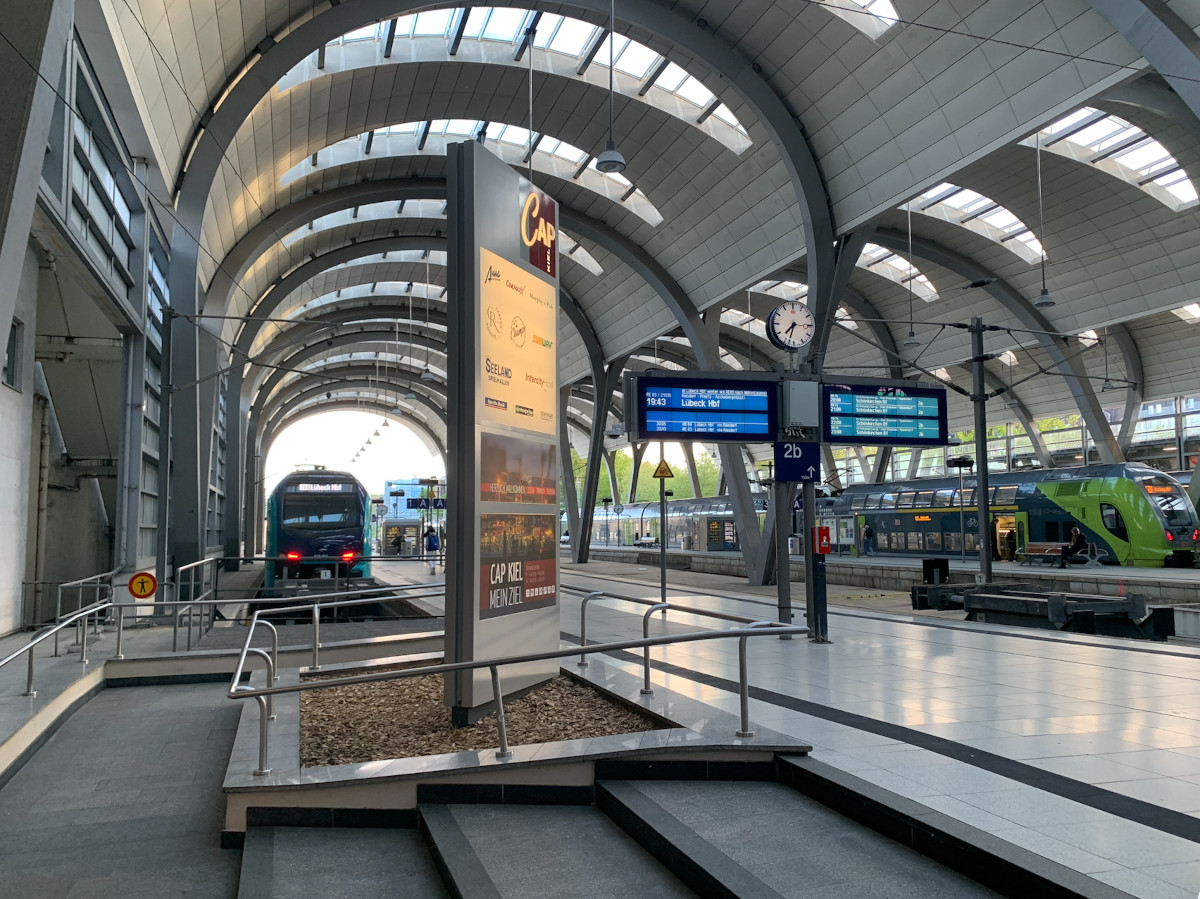
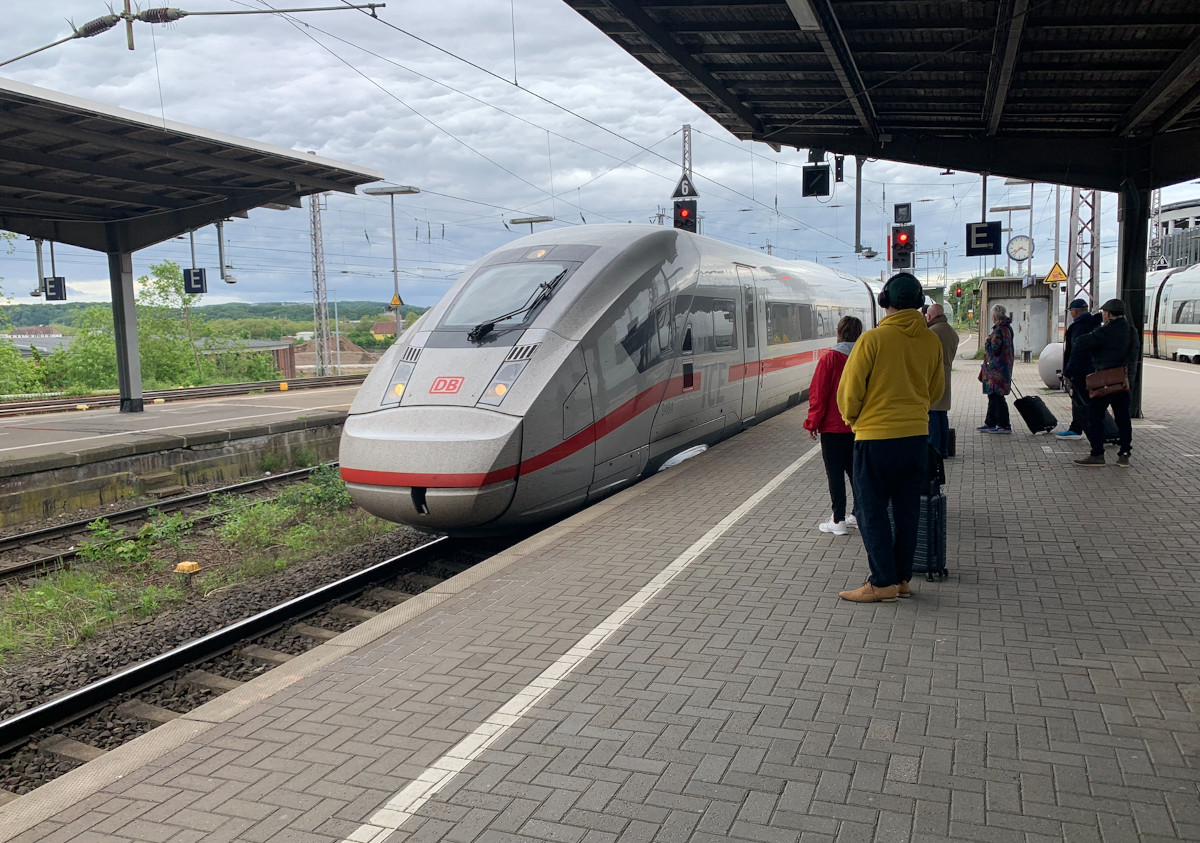
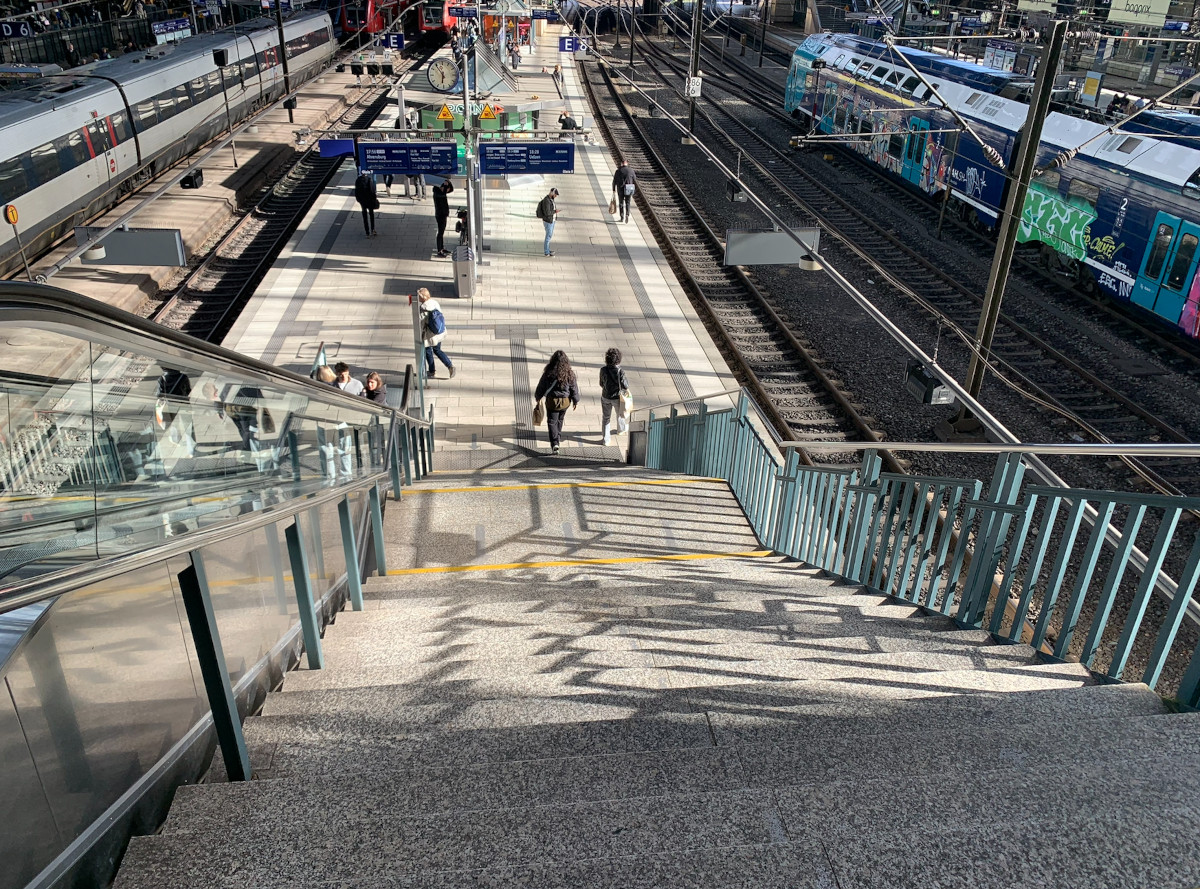
The first one is Kiel Hbf - which it does kind of tell you.
| Re: Reopening former rail line between Hythe and Totton - ongoing discussion, merged topic In "Campaigns for new and improved services" [375075/10308/28] Posted by Witham Bobby at 09:48, 13th May 2026 | |
£45M to upgrade this short branch line from freight-only to passenger use seems exorbitant. Were they planning on building the new station at Hythe out of kryptonite, or something?
| Re: Reopening former rail line between Hythe and Totton - ongoing discussion, merged topic In "Campaigns for new and improved services" [375074/10308/28] Posted by johnneyw at 09:40, 13th May 2026 Already liked by Witham Bobby | |
From Rail Advent[/utl]
A decision is expected soon by the Office of Rail and Road for Alliance Rail’s proposed new service from Marchwood to Southampton and London Waterloo.
The decision is expected within the next two months.
Work has progressed to develop a timetable and make the Class 769 trains ready for use.
The decision is expected within the next two months.
Work has progressed to develop a timetable and make the Class 769 trains ready for use.
Looks like the ORR has sunk this one, for now at least.
https://www.bbc.co.uk/news/articles/c202n2zlz85o
| Re: Crossing from country to country In "The Lighter Side" [375073/32025/30] Posted by eightonedee at 09:08, 13th May 2026 | |
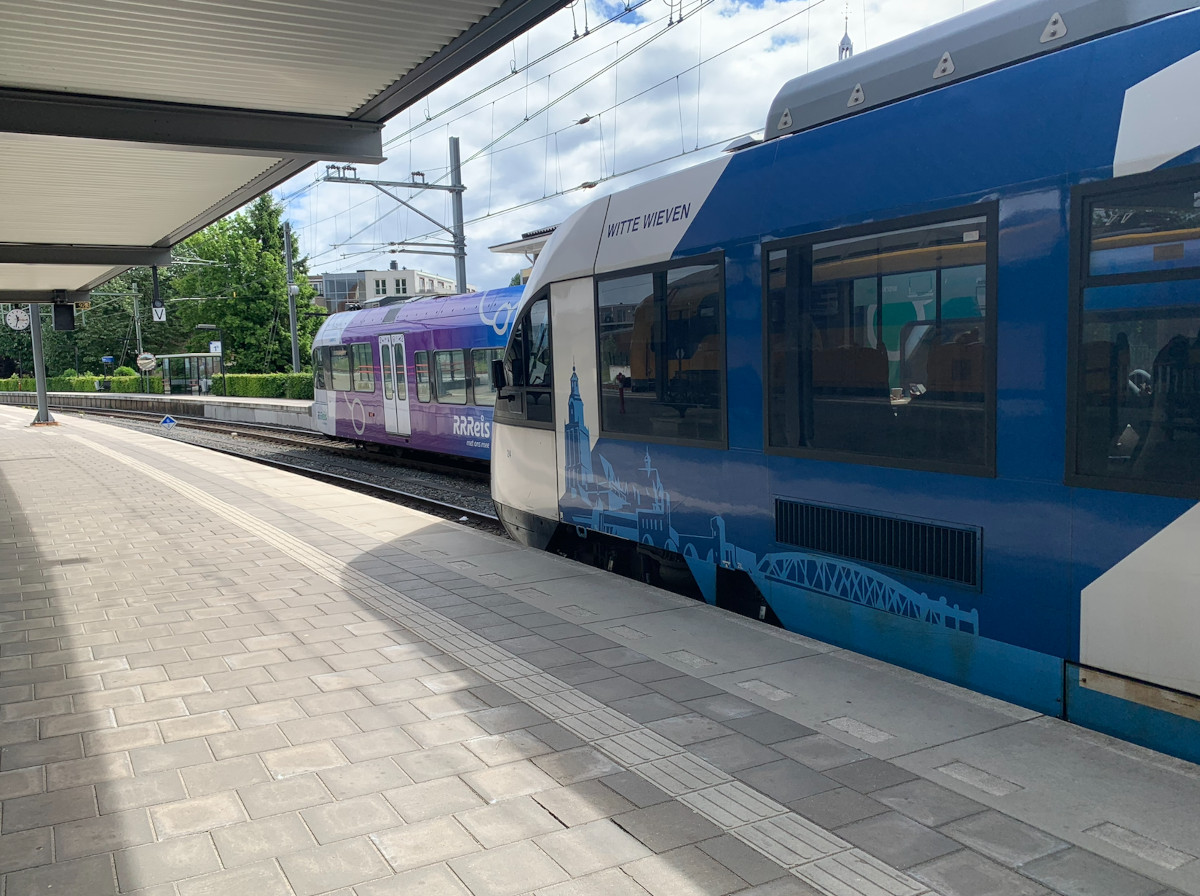
Disappointed to see that someone has vandalised the smart Schleswig-Holstein livery on that double decked train on the penultimate picture. Was that Hamburg HBF?
| Re: South Western Railways Waterloo - Bristol services axed In "South Western services" [375072/25368/42] Posted by rogerw at 08:54, 13th May 2026 | |
Sub-leasing stock from other TOCs
| Mental health hub celebrates first year at Wolverhampton Railway Station In "Across the West" [375071/32026/26] Posted by Chris from Nailsea at 08:10, 13th May 2026 | |
From the BBC:
Mental health hub celebrates year at station
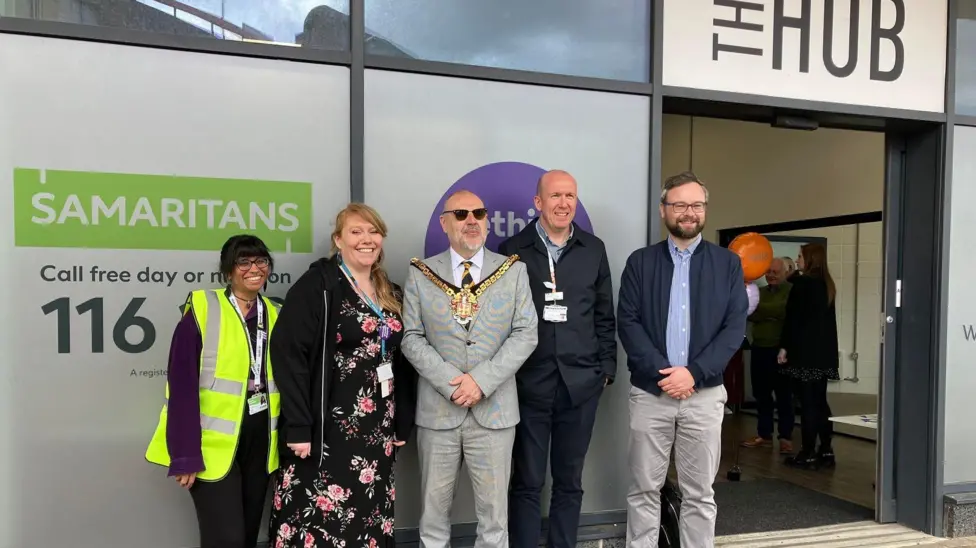
Kirsten Rose from Rethink joined the mayor of Wolverhampton, Craig Collingswood, along with others to mark the first anniversary - Image © WMR
More than 2,000 people have used a mental health support service based at Wolverhampton Railway Station since it opened a year ago, officials said.
The Hub is run by West Midlands Railway (WMR) in partnership with Rethink Mental Illness and enables local organisations to host pop-ups and events in its space.
Kirsten Rose, from Rethink Mental Illness, said the service had given people guidance, mental health and wellbeing support, while social groups had benefited from using the facility.
The safe space was inspired by a similar hub in Hull, which brought about a 63% reduction in people arriving at nearby stations in crisis, WMR said last year when it was launched.
To mark the first year and Mental Health Awareness Week this week, a series of pop-up events were planned at the building, WMR said.
Thomas Harty, security and safeguarding manager at WMR, said: "Wolverhampton is one of our busiest stations in the West Midlands, making it the perfect location to offer support to passengers travelling through and to local residents too. We are so pleased that the Hub has become truly embedded in the local community, and that so many people have used it to access vital resources and support."
Rose said it had been great to establish partnerships not only with other services, but with train station staff, security officers and British Transport Police who have supported people in use the service.
Kirsten Rose from Rethink joined the mayor of Wolverhampton, Craig Collingswood, along with others to mark the first anniversary - Image © WMR
More than 2,000 people have used a mental health support service based at Wolverhampton Railway Station since it opened a year ago, officials said.
The Hub is run by West Midlands Railway (WMR) in partnership with Rethink Mental Illness and enables local organisations to host pop-ups and events in its space.
Kirsten Rose, from Rethink Mental Illness, said the service had given people guidance, mental health and wellbeing support, while social groups had benefited from using the facility.
The safe space was inspired by a similar hub in Hull, which brought about a 63% reduction in people arriving at nearby stations in crisis, WMR said last year when it was launched.
To mark the first year and Mental Health Awareness Week this week, a series of pop-up events were planned at the building, WMR said.
Thomas Harty, security and safeguarding manager at WMR, said: "Wolverhampton is one of our busiest stations in the West Midlands, making it the perfect location to offer support to passengers travelling through and to local residents too. We are so pleased that the Hub has become truly embedded in the local community, and that so many people have used it to access vital resources and support."
Rose said it had been great to establish partnerships not only with other services, but with train station staff, security officers and British Transport Police who have supported people in use the service.
| Re: So what do we expect of a nationalised GWR? In "Looking forward - the next 2, 5, 10 and 20 years" [375070/32002/40] Posted by Electric train at 07:47, 13th May 2026 | |
A bit of a reality check ..........
Nothing will change overnight.
The NR Route and GWR TOC executive boards in consultation with DfT will have been working on the shape of the structure of the GW.
The benefits may not be seen as a "wow" impact day one or even week one, however a lookback a year on should reveal improvements in performance.
Future rolling stock, IET's are with the Route for at least a decade or 2, 387 will be in the TV for many years. Replacement for the Diesel fleets my guess early 2030's
The current legislation limits what can be done, ie the forming of GBR and the bringing into public ownership the franchised TOC's; it be interesting to see what is in todays Kings speech relating to the railways, could we see the reshaping of the NR Routes and former TOC areas? The handing over the London Metro services to TfL and similar the other Mayoral areas in England?
| Crossing from country to country In "The Lighter Side" [375069/32025/30] Posted by grahame at 07:28, 13th May 2026 | |
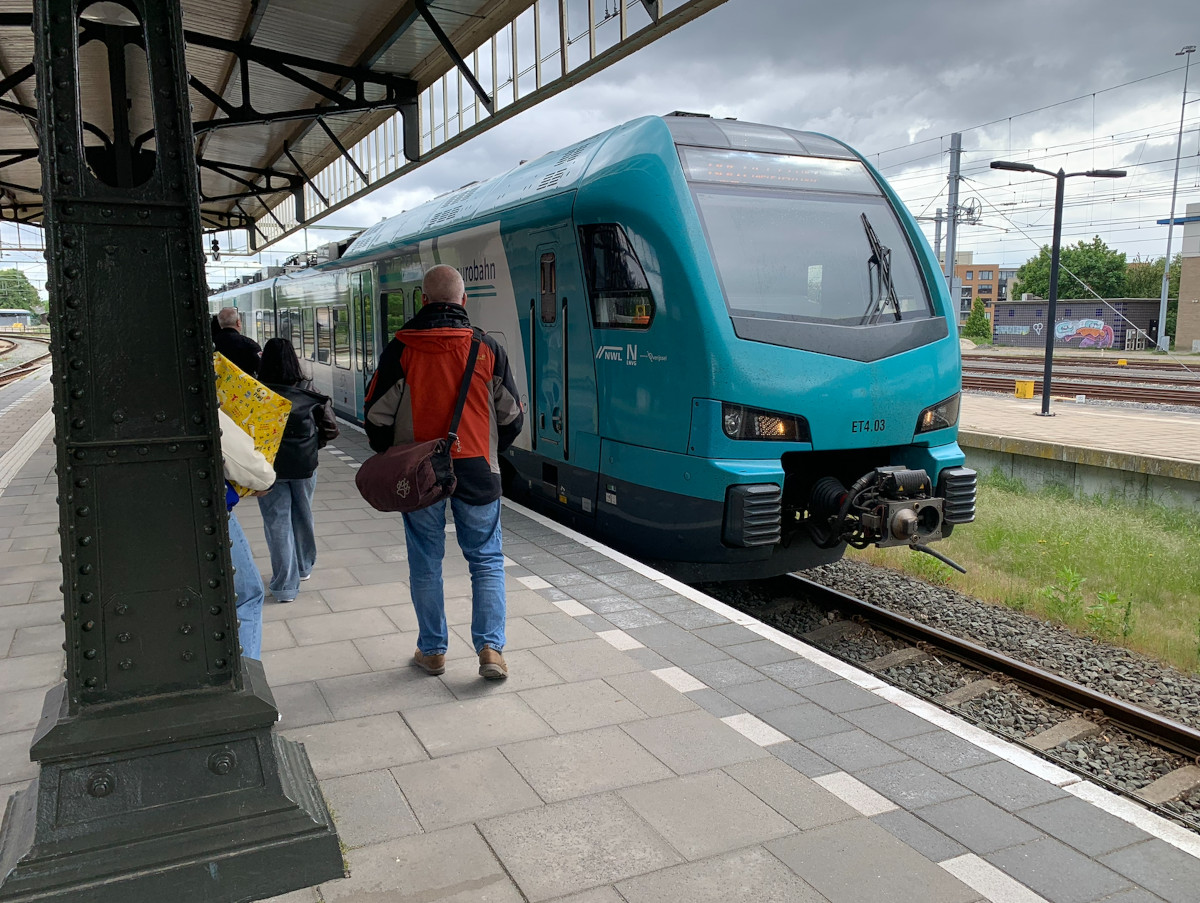
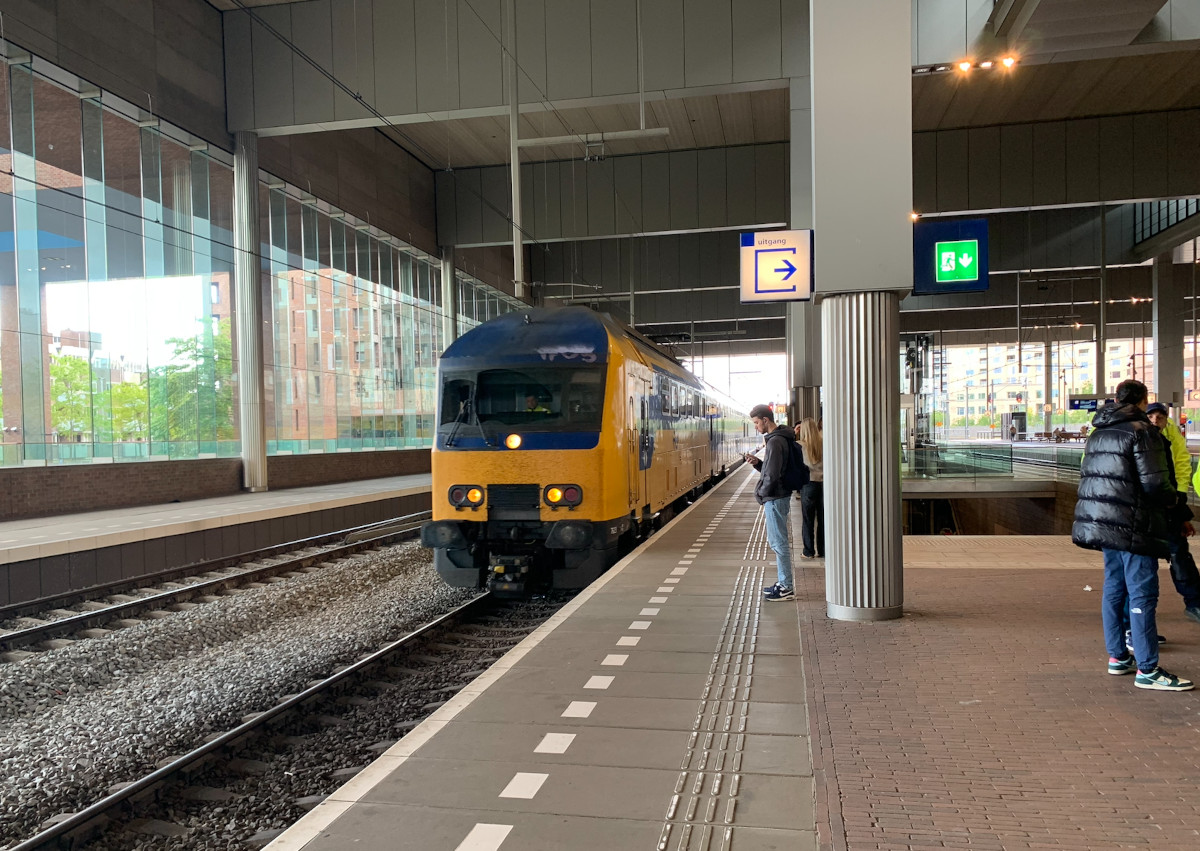
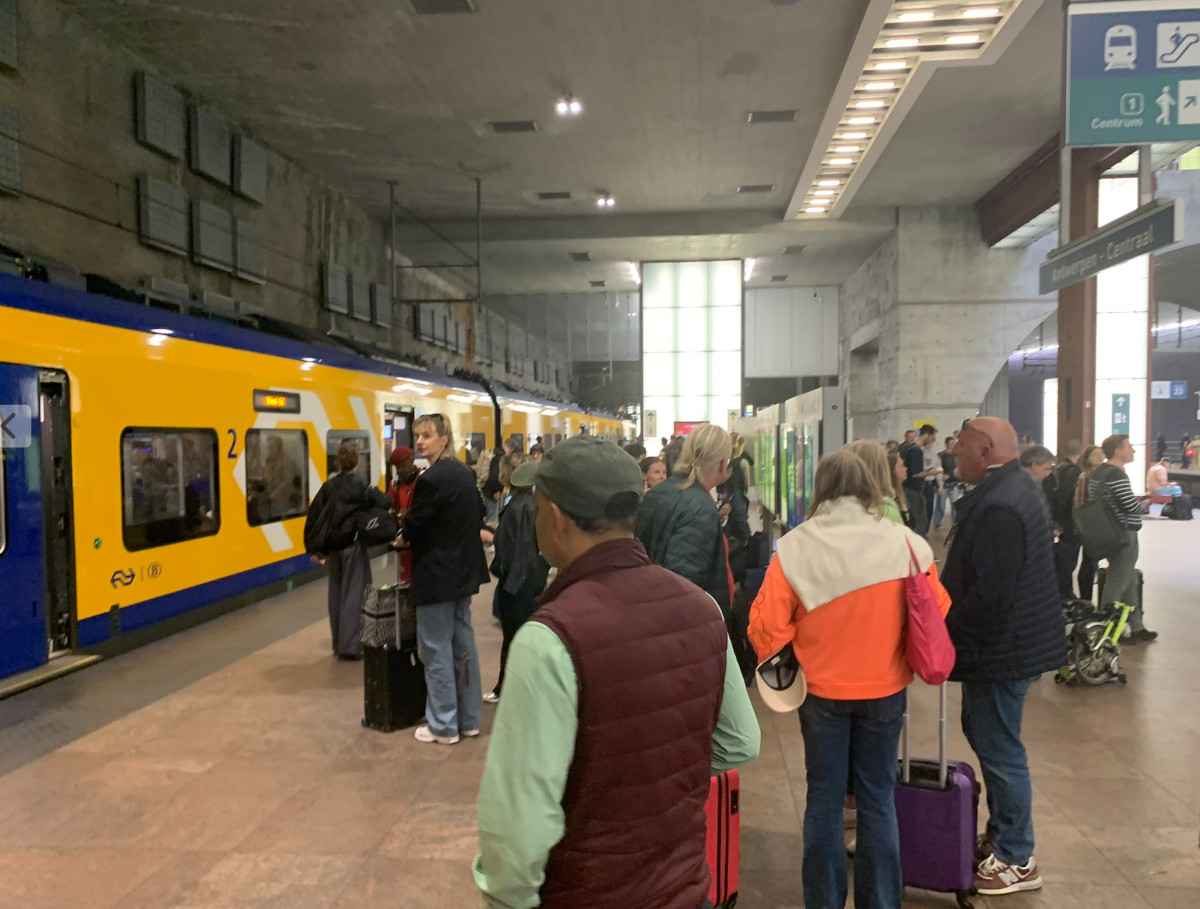
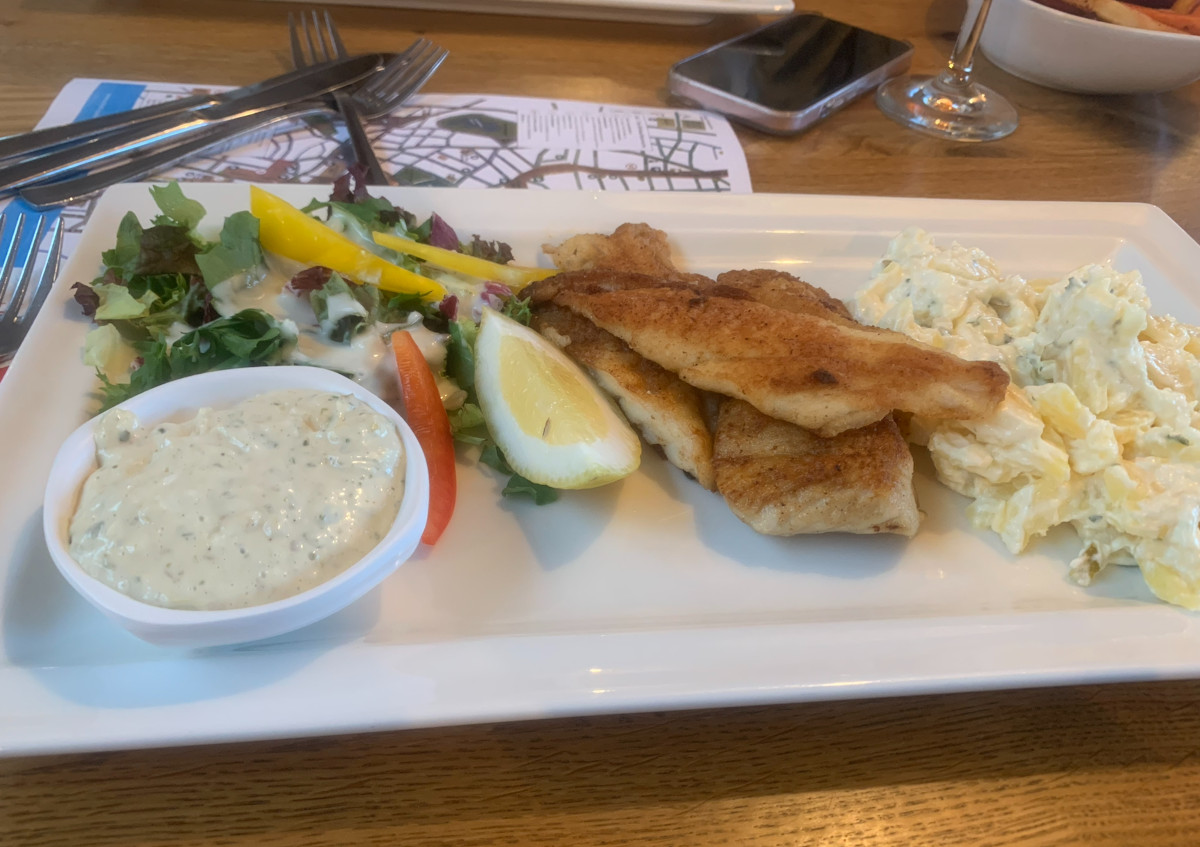
Three countries, six trains (five of them electric) from yesterday. Not in order (though the last picture - the fish supper - is)
| Re: Kernow Connect - a new Okehampton to Bodmin line In "Campaigns for new and improved services" [375068/32014/28] Posted by grahame at 06:13, 13th May 2026 | |
A hundred and fifty years sgo, this was the sort of project that not only got support and investors, but actually reached fruition and came into existence, making perhaps a living - and certainly bringing propsperity to the area served - for around 100 years. And within my memory, the roads from Exeter through to serve Cornwall have been re-engineered / replaced out of all recognition. This proposal had me turning back to look at the "Withererd Arm" - the South Western line beyond Exeter, via Okehampton and Launceston to Wadebridge (you could change for Bodmin) and Padstow.
We are not of an age in the UK to bring back that railway in that form - it's far too late and so much has moved on. Modern railways take different courses, being far less dependent on the layout of the countryside with massive tunnels and viaducts where previously twisty, turny, incredible routes were engineered to the limits of the day, including an ability to go round corners which take time on fast lines, but an inability to fall amd climb as steeply as passenger lines can do these days.
I do not see a line from Exeter through to North Cornwall opening in my lifetime - but in another 100 years, who knows? Exeter - Okehampton - Lydford - Launceston - midCornwall, with a branch from Lydford to Tavistock and Plymouth? If we were in Spain, France, Germany, Benelux, Turkey, we might already be finding major rail construction to replace or supplement some of the lines with more challenging characteristics. But in our current generation and UK situation, North Cornwall is unlikely.
| 'Final push' on multi-million pound York Station Gateway access scheme In "The Wider Picture in the United Kingdom" [375067/32024/51] Posted by Chris from Nailsea at 05:29, 13th May 2026 | |
From the BBC:
'Final push' on train station access scheme
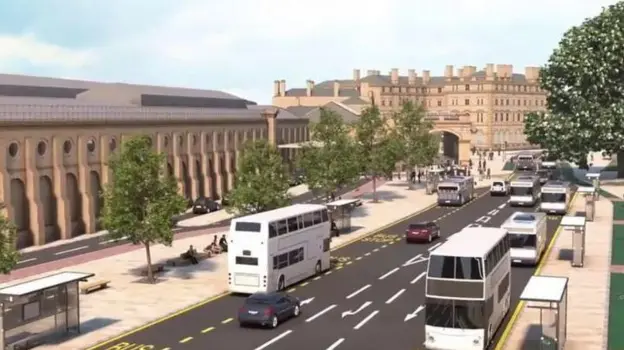
The York Gateway scheme will improve access to the city's railway station, according to the council - Image © City of York Council
Contractors have begun a "final push" towards completing multi-million pound highway works at the front of York Station.
The final phase of the scheme is set to begin on 1 June, and includes four weeks of planned overnight closures that month, City of York Council said. Once completed it is set to deliver a new permanent road layout, including continuous cycle lanes and footways, upgraded bus stops and new public spaces.
Andy Shrimpton, co-owner of Cycle Heaven next to the station, said the work had been "messy and very dirty" and had made it hard to "service customers and for staff to function". No date has been set for completion of the work.
However, Shrimpton - whose business is ultimately due to be relocated as part of the plan - said the work so far had created a "once in a generation change". He said it had seen the removal of an "enormous carbuncle of a bridge" which now meant people's first view on leaving the station was now "beautiful arches in the city wall", exposed by the removal of the Queen Street bridge.
Meanwhile, Darren Avey, director of York Station Taxis, said: "It has been horrendous, the work has been delayed by about 20 months, but we are seeing the end now and it's been a fantastic project when you compare before and after."
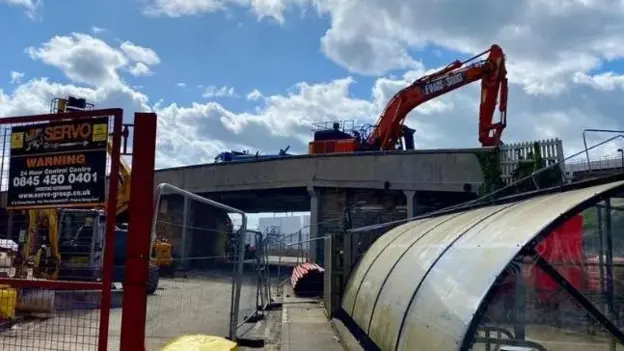
Work near the station has included the removal of Queen Street Bridge - Image © Chloe Laversuch/BBC
The regeneration of the area at the front of York Station began in 2023, and originally had a budget of around £26m. In March an audit found the scheme was £28.5m over budget.
The final phase of work will focus on finalising the new road layout and ensuring all walking, cycling and bus infrastructure is in place, before the highways phase of the project is completed.
City of York Council said four phases of night-time closures would take place between 20:00 and 06:00 BST, from 1 to 26 June, with roads reopening during the day.
Councillor Kate Ravilious, the council's executive member for transport, said the completed final stages would see "fantastic open spaces for everyone to enjoy, safe walking and cycling routes and an improved road layout".
Works were originally set to finish in May last year, but are now due to be completed this summer. In a statement the authority said more details about each of the phases of work, including transport information, "would be published in advance of the work starting".
The York Gateway scheme will improve access to the city's railway station, according to the council - Image © City of York Council
Contractors have begun a "final push" towards completing multi-million pound highway works at the front of York Station.
The final phase of the scheme is set to begin on 1 June, and includes four weeks of planned overnight closures that month, City of York Council said. Once completed it is set to deliver a new permanent road layout, including continuous cycle lanes and footways, upgraded bus stops and new public spaces.
Andy Shrimpton, co-owner of Cycle Heaven next to the station, said the work had been "messy and very dirty" and had made it hard to "service customers and for staff to function". No date has been set for completion of the work.
However, Shrimpton - whose business is ultimately due to be relocated as part of the plan - said the work so far had created a "once in a generation change". He said it had seen the removal of an "enormous carbuncle of a bridge" which now meant people's first view on leaving the station was now "beautiful arches in the city wall", exposed by the removal of the Queen Street bridge.
Meanwhile, Darren Avey, director of York Station Taxis, said: "It has been horrendous, the work has been delayed by about 20 months, but we are seeing the end now and it's been a fantastic project when you compare before and after."
Work near the station has included the removal of Queen Street Bridge - Image © Chloe Laversuch/BBC
The regeneration of the area at the front of York Station began in 2023, and originally had a budget of around £26m. In March an audit found the scheme was £28.5m over budget.
The final phase of work will focus on finalising the new road layout and ensuring all walking, cycling and bus infrastructure is in place, before the highways phase of the project is completed.
City of York Council said four phases of night-time closures would take place between 20:00 and 06:00 BST, from 1 to 26 June, with roads reopening during the day.
Councillor Kate Ravilious, the council's executive member for transport, said the completed final stages would see "fantastic open spaces for everyone to enjoy, safe walking and cycling routes and an improved road layout".
Works were originally set to finish in May last year, but are now due to be completed this summer. In a statement the authority said more details about each of the phases of work, including transport information, "would be published in advance of the work starting".
| Re: Finn and JayMac's travels. Day 9 where were we? In "The Lighter Side" [375066/32019/30] Posted by JayMac at 04:40, 13th May 2026 | |
Listowel and Ballybunion, I assume!
Wonderful name (sounds like something from "Oh, Mr Porter"), weird Lartigue monorail system. That'll make up for missing the Cultra museum!
Wonderful name (sounds like something from "Oh, Mr Porter"), weird Lartigue monorail system. That'll make up for missing the Cultra museum!
Correct. A delightfully weird railway. l'll get round to posting more pictures when I complete my trip report in Frequent Posters.
| Re: Finn and JayMac's travels. Day 8 where were we? In "The Lighter Side" [375065/32012/30] Posted by JayMac at 04:37, 13th May 2026 | |
Top one, Kilmeadan Station Waterford Suir Valley Railway
Bottom one, Limerick Junction
Bottom one, Limerick Junction
Both correct.
| Study funded to save Newcastle's Coppersmith's Shop historic railway works site In "Railway History and related topics" [375064/32023/55] Posted by Chris from Nailsea at 04:37, 13th May 2026 | |
From the BBC:
Study funded to save historic railway works site
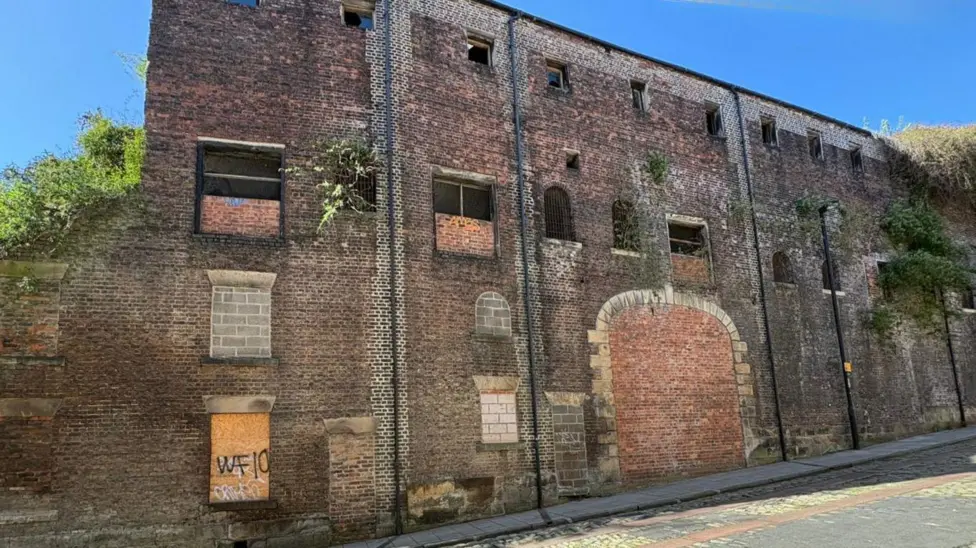
The Coppersmith's Shop formed part of George Stephenson's locomotive works - Image © Newcastle City Council
An empty Grade II-listed building once used as a workshop for one of the first railway companies could be saved for the future.
Coppersmith's Shop near Newcastle Quayside has received £65,000 from Historic England for surveys and technical studies in the hope it can be protected from collapse.
Built in the 1800s, the building was part of a collection of workshops owned by the Robert Stephenson & Co Works, which built early steam locomotives.
Historic England's Jules Brown said she was excited for the chance to uncover the history of the building, which hailed from "the crucible days of our railway heritage".
"Our grant is a vital first step to reveal a detailed understanding of it, creating the best chance of moving quickly towards a sensitive long-term conservation and reuse solution," she said.
The Coppersmith's Shop was used to make a range of parts such as boiler pipes and cab fittings before the company vacated the site. It has been left empty for decades and is in a poor condition.
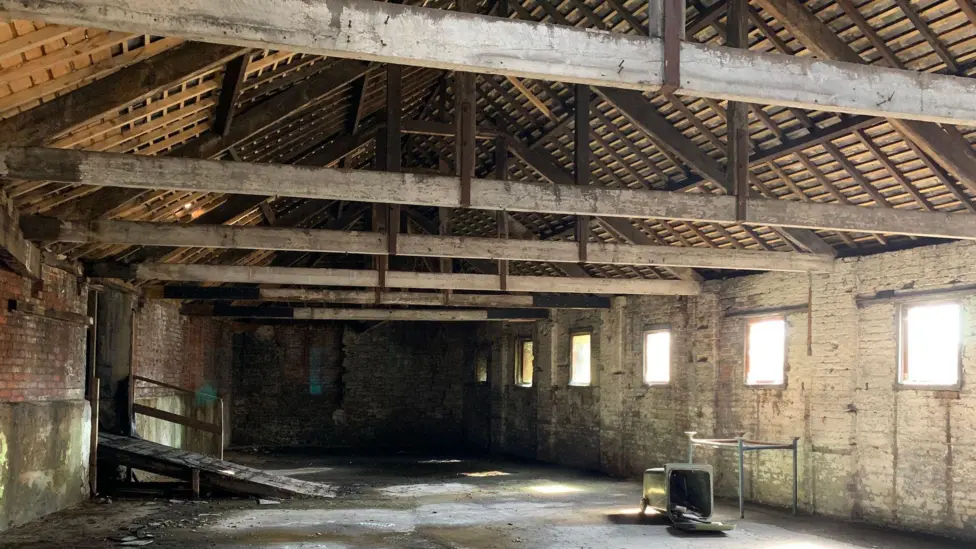
Surveys will now be carried out to see if the building can be saved from collapse - Image © Newcastle City Council
Newcastle City Council said it hoped the building could be restored and become a new attraction of the Stephenson Quarter, which is being developed behind Central Station.
Last year two other buildings from the Robert Stephenson & Co Works - the Machine Shop and Smith's Shop - were earmarked for demolition because they had become "dangerous".
However, the Boiler Shop and Pattern Shop have been restored on the site and there are plans for housing at Orchard Yard and an office block at One Founders Place.
The Stephenson Quarter development has also attracted Atom Bank, which plans to relocate to the area and move 600 jobs to its new office.
Plans for a large £138m development on Forth Yard are also in the works, which is expected to create a new neighbourhood in the city centre.
The Coppersmith's Shop formed part of George Stephenson's locomotive works - Image © Newcastle City Council
An empty Grade II-listed building once used as a workshop for one of the first railway companies could be saved for the future.
Coppersmith's Shop near Newcastle Quayside has received £65,000 from Historic England for surveys and technical studies in the hope it can be protected from collapse.
Built in the 1800s, the building was part of a collection of workshops owned by the Robert Stephenson & Co Works, which built early steam locomotives.
Historic England's Jules Brown said she was excited for the chance to uncover the history of the building, which hailed from "the crucible days of our railway heritage".
"Our grant is a vital first step to reveal a detailed understanding of it, creating the best chance of moving quickly towards a sensitive long-term conservation and reuse solution," she said.
The Coppersmith's Shop was used to make a range of parts such as boiler pipes and cab fittings before the company vacated the site. It has been left empty for decades and is in a poor condition.
Surveys will now be carried out to see if the building can be saved from collapse - Image © Newcastle City Council
Newcastle City Council said it hoped the building could be restored and become a new attraction of the Stephenson Quarter, which is being developed behind Central Station.
Last year two other buildings from the Robert Stephenson & Co Works - the Machine Shop and Smith's Shop - were earmarked for demolition because they had become "dangerous".
However, the Boiler Shop and Pattern Shop have been restored on the site and there are plans for housing at Orchard Yard and an office block at One Founders Place.
The Stephenson Quarter development has also attracted Atom Bank, which plans to relocate to the area and move 600 jobs to its new office.
Plans for a large £138m development on Forth Yard are also in the works, which is expected to create a new neighbourhood in the city centre.
| Re: Kernow Connect - a new Okehampton to Bodmin line In "Campaigns for new and improved services" [375063/32014/28] Posted by Chris from Nailsea at 00:21, 13th May 2026 | |

| Re: Kernow Connect - a new Okehampton to Bodmin line In "Campaigns for new and improved services" [375062/32014/28] Posted by eightonedee at 23:01, 12th May 2026 Already liked by The Tall Controller, Ralph Ayres | |
Is this the new Go-op scheme?
| Re: Finn and JayMac's travels. Day 9 where were we? In "The Lighter Side" [375061/32019/30] Posted by eightonedee at 22:57, 12th May 2026 | |
Listowel and Ballybunion, I assume!
Wonderful name (sounds like something from "Oh, Mr Porter"), weird Lartigue monorail system. That'll make up for missing the Cultra museum!
| Re: Finn and JayMac's travels. Day 8 where were we? In "The Lighter Side" [375060/32012/30] Posted by bradshaw at 22:19, 12th May 2026 Already liked by JayMac | |
Top one, Kilmeadan Station Waterford Suir Valley Railway
Bottom one, Limerick Junction
| Re: Kernow Connect - a new Okehampton to Bodmin line In "Campaigns for new and improved services" [375059/32014/28] Posted by Chris from Nailsea at 22:06, 12th May 2026 | |
Going off at something of a tangent again, I remember this television advert from nearly 20 years ago: from YouTube, see https://www.youtube.com/watch?v=7laPLF5w3Ys (Please bear with the rubbish quality of the images from those days).
CfN.

| Re: Finn and JayMac's travels. Day 9 where were we? In "The Lighter Side" [375058/32019/30] Posted by bobm at 21:20, 12th May 2026 | |
That looks like a remarkably narrow gauge railway to me. 

Now if that had been me in the photo I would’ve expected CfN to link the size of the gauge with my alleged ample girth.
| Great Central Asian Railway Journeys In "Media about railways, and other means of transport" [375057/32022/49] Posted by ChrisB at 21:01, 12th May 2026 | |
On Iplayer & BBC2 1830 this week, started yesterday May 11
Michael Portillo embarks on a thrilling new railway adventure following the Silk Road through the most populous country of Central Asia, Uzbekistan.
At the meeting point of east and west, this region has been home to some of the world’s greatest empires: ruled by the Mongols, the ferocious conqueror Tamerlane, imperial Russia and the Soviet Union.
Michael begins in the capital, Tashkent, where he takes in its vast, vibrant market and samples popular Uzbek delicacies. He travels on the lavishly decorated Soviet-era metro, which was hidden from the outside world until 2018, when a ban on photographing it was lifted. Michael hears how an earthquake resulted in Tashkent becoming the capital of Soviet modernist architecture, and he makes his TikTok debut with a globally famous Uzbek social media star
At the meeting point of east and west, this region has been home to some of the world’s greatest empires: ruled by the Mongols, the ferocious conqueror Tamerlane, imperial Russia and the Soviet Union.
Michael begins in the capital, Tashkent, where he takes in its vast, vibrant market and samples popular Uzbek delicacies. He travels on the lavishly decorated Soviet-era metro, which was hidden from the outside world until 2018, when a ban on photographing it was lifted. Michael hears how an earthquake resulted in Tashkent becoming the capital of Soviet modernist architecture, and he makes his TikTok debut with a globally famous Uzbek social media star
